Showing posts with label PISA. Show all posts
February 07, 2018

What makes for a satisfied science teacher?

by , in
by Tarek Mostafa
Analyst, Directorate for Education and Skills


Teachers play a vital role in the lives of their students. They impart knowledge, provide pastoral care, act as role models and, above all, create an environment that’s conducive to learning. But teaching is fraught with numerous challenges that could lead to dissatisfaction and ultimately to drop-out from the profession. Science teachers are particularly vulnerable to quitting their jobs given the opportunities that exist outside the teaching profession.

So what makes a science teacher satisfied enough that he or she would want to keep teaching, despite the challenges they might face?

Data from PISA’s 2015 teacher questionnaire provide interesting evidence.

Science teachers who reported that pursuing a career in the teaching profession was their goal after finishing secondary school are far more satisfied with their jobs and with the profession as a whole. These teachers represent about 58% of all teachers on average across all countries. The relationship between these long-held ambitions and teacher satisfaction is strong across most countries and economies, and particularly in Beijing-Shanghai-Jiangsu-Guangdong (China), Brazil, the Dominican Republic, Peru and the United Arab Emirates.

But a lack of school educational and physical resources, and behavioural problems among students in school could undermine teachers’ satisfaction. For instance, teachers who perceive that the lack of teaching staff hinders instruction tend to be less satisfied with their profession and with their current job. The difference in satisfaction between the teachers who reported that these shortfalls hinder instruction to a great extent and those who reported little or no impact are the largest in Australia, Brazil, Chile, Germany, Macao (China) and the United Arab Emirates. The findings also show that in 10 out of 18 countries and economies, teachers’ satisfaction with their current job is positively associated with the disciplinary climate in science classes, as perceived by students. The associations are particularly strong in Brazil, the Dominican Republic, Germany, Peru and the United States.

The presence of a collaborative and collegial working environment could boost teacher satisfaction. In fact, teachers who reported frequent collaboration among their colleagues tend to be more satisfied with their job and with the profession as a whole. Collaborative activities are more common in Australia, Beijing-Shanghai-Jiangsu-Guangdong (China), Colombia, the Dominican Republic, Korea, Macao (China), Peru, Portugal and the United Arab Emirates, and less common in Brazil, Chile, the Czech Republic, Germany, Italy and the United States.

PISA 2015 also shows that science teachers who engaged in more than three types of professional-development activities during the preceding 12 months tend to be more satisfied with the teaching profession and with their current job. On average and across all countries, 52% of teachers undertook more than three different types of professional-development activities during the last 12 months. The proportions are particularly large in Beijing-Shanghai-Jiangsu-Guangdong China (82%), Brazil (65%), the Dominican Republic (76%), Peru (65%) and the United Arab Emirates (65%).

Last but not least, some factors usually associated with challenging learning environments, such as the presence of large proportions of immigrant students or of students who do not speak the language of the host country, are not linked to teachers’ dissatisfaction with their job or the profession. This finding is particularly interesting because it shows that teachers do not necessarily mind teaching in schools with more demanding student populations as long as the environment is conducive to learning, the school climate is positive, and adequate resources are available.

To sum up, teacher satisfaction is positively associated with factors known to improve students’ performance, such as collegial and positive school environments. In other words, teachers’ satisfaction is both an aspect and a consequence of the school environment. As such, one has to improve the learning experience for all students in order to boost teachers’ professional satisfaction.

Links 
The Programme for International Student Assessment (PISA)
PISA in Focus No. 81 - What do science teachers find most satisfying about their work?
Working Paper No. 168 - Science teachers’ satisfaction: Evidence from the PISA 2015 teacher survey

Follow the conversation on Twitter: #OECDPISA

Image source: @Shutterstock
January 29, 2018

Succeeding with resilience – Lessons for schools

by , in
by Johanna Boersch-Supan
Director, Vodafone Germany Foundation – think tank 

Digitisation is expected to profoundly change the way we learn and work – at a faster pace than previous major drivers of transformation. Many children entering school today are likely to end up working in jobs that do not yet exist. Preparing students for these unchartered territories means that we not only have to make sure that they have the right technical capabilities but that we have to strengthen their emotional and social skills. Resilience, the individual capacity to overcome adverse circumstances and use them as sources for personal development, lies at the core of being able to successfully adapt to change and thus actively engage with our digital world.

A special PISA analysis conducted by the OECD in collaboration with the Vodafone Germany Foundation shows that several countries were able to increase the share of academically resilient students with disadvantaged backgrounds over the last decade.* The increase was particularly pronounced –among other countries and economies– in Germany: while in 2006 only a quarter of disadvantaged students performed well in all three academic subjects tested in PISA, by 2015 a third did.


While resilience is foremost an individual characteristic, the in-depth analysis of PISA data from 2012 and 2015 suggests that the school environment can play a key role in mitigating the risk of low achievement among disadvantaged students. To this end, the study was able to identify attributes common to schools in which disadvantaged students succeed. Across the vast majority of education systems examined, the likelihood that disadvantaged students are resilient is higher in schools where students reported a good disciplinary climate, compared to schools with more disruptive environments. This holds even after accounting for differences in students’ and schools’ socio-economic profiles and individual characteristics associated with resilience. Attending orderly classes, in which students can focus and teachers provide well-paced instruction, is beneficial for all students, but in particular for the most vulnerable. 

By contrast, the likelihood of resilience among disadvantaged students is only weakly related to the amount of human and material resources available in their schools, measured through indicators of class size and student-computer ratios. Especially in Germany, however, disadvantaged students are more likely to be resilient in schools that offer a high number of extracurricular activities. The fact that no correlation exists between most resource indicators and the share of resilient students among socio-economically disadvantaged students does not mean that investments in education do not matter. Rather it suggests that resources help disadvantaged students to succeed only if they effectively improve aspects of their learning environment that are more directly linked to their opportunities to learn. Thus, the fact that extracurricular activities are associated with a greater likelihood of resilience may reflect the way in which these investments promote engagement among teachers, students and the students’ families, and can help develop a sense of belonging at school.

The PISA data also offer insight into some specific school policies and managerial practices which can help improve the disciplinary climate at the school level. First, students tend to report a better disciplinary climate in schools with a lower turnover among teachers. Unstable teaching teams may lack cohesion and limit the accumulation of experience that is necessary to establish an environment conducive to learning even in difficult conditions. Teacher turnover can be reduced by rewarding collaboration between teachers and by developing mentorship programmes to ensure that more experienced teachers can support new ones and help them quickly establish strong bonds with the school. A transformational leadership style adopted by principals is a second factor associated with a positive disciplinary climate experienced by students. Transformational leaders foster capacity development and work to promote a high level of commitment among teachers towards a common mission, strategic goals and high academic standards.

The 2017 edition of the OECD Employment Outlook shows rising levels of socio-economic inequality driven, among other factors, by automation in the labour market. Understanding how to support resilience in students is essential not only for equipping them to thrive in a digital future but also for creating more equal opportunities in education and thereby strengthening social cohesion.

*A German version of the study focusing on data from Germany can be found at: resilienz.vodafone-stiftung.de

Links
January 22, 2018

How to prepare students for the complexity of a global society

by , in
by Anthony Jackson, Director, Center for Global Education at Asia Society
Andreas Schleicher, Director, Directorate for Education and Skills


In all countries, rapidly changing global economic, digital, cultural, and environmental forces are shaping young people’s lives and their futures. From Boston to Bangkok to Buenos Aires, we live today in a VUCA world: volatile, uncertain, complex, and ambiguous.

The world’s growing complexity and diversity present both opportunity and challenge. On the one hand, globalization can bring important new perspectives, innovation, and improved living standards. But on the other, it can also contribute to economic inequality, social division, and conflict.

How well education systems prepare all of their students to thrive amid today’s rapidly changing world will determine the future prosperity and security of their nations – and of the world as a whole. Global competence education is what will empower students to do just that. Globally competent students can draw on and combine the disciplinary knowledge and modes of thinking acquired in schools to ask questions, analyse data and arguments, explain phenomena, and develop a position concerning a local, global or cultural issue. They can retain their cultural identity but are simultaneously aware of the cultural values and beliefs of people around them, they examine the origins and implications of others’ and their own assumptions. And they can create opportunities to take informed, reflective action and have their voices heard.

On top of the complexity of our increasingly interconnected world, and the call of employers for better intercultural skills, we’ve watched in recent years as waves of nationalism, racism, and anti-globalism have swept across countries around the world. It makes global competence education that much more critical. To put it simply, the number-one solution to combating nationalist fervor is increasing global understanding.

Both the United Nations and OECD have prioritized global citizenship and global competence education in recent years, with good reason. Globally competent individuals are aware, curious, and interested in learning about the world and how it works, beyond their immediate environment. They recognize the perspectives and worldviews of others and are able to interact and communicate with people across cultures and regions in appropriate ways. And most critically, globally competent individuals don’t just understand the world (which is no small thing in and of itself)—they are an active part of it. They can and do take action to solve problems big and small to improve our collective well-being.

At the end of the day, it is globally competent individuals who will be able to solve the world’s seemingly intractable problems. And it’s up to our world’s educators to prepare those individuals for their global futures.

Schools can make an important difference. They are the first place where children encounter the diversity of society. They can provide students with opportunities to learn about global developments that affect the world and their own lives. They can teach students to develop a fact-based and critical worldview and equip students with an appreciation of other cultures and an awareness of their own cultural identities. They can engage students in experiences that facilitate international and intercultural relations. And they can promote the value of diversity, which in turn encourages sensitivity, respect and appreciation.

But how to do that? In a new publication by the Center for Global Education at Asia Society and OECD, Teaching for global competence in a rapidly changing world, we set forward the PISA framework for global competence developed by OECD, which aligns closely with the definition developed by the Center for Global Education. Based on Asia Society’s extensive experience supporting educators in integrating global competence into their teaching, the publication also provides practical guidance and examples of how educators can embed global competence into their existing curriculum, instruction, and assessment.

As the publication demonstrates through its myriad examples, teachers from around the world have already recognized the importance of teaching for global competence. In one example from a political science teacher in India, students visited a nearby refugee camp to learn about the complexity of the global refugee crisis; in another, a social studies teacher in Mexico guided her students to make recommendations for reducing corruption that they then presented to local officials.

But it also shows that for all students to develop global competence – regardless of their wealth, ethnicity, gender, or background – we need to create access to high-quality professional learning for every teacher in the world. Teachers prepared to develop students’ global competence is a requirement for a sustainable, livable future.

Professional learning for teachers is key, and that requires leveraging digital technology to rapidly build capacity at scale. The challenge now is providing access to these types of professional development resources for all teachers, to transform their teaching methods, their classrooms, their schools – and, eventually, each and every one of their students.

Links
Teaching for global competence in a rapidly changing world
Preparing our youth for an inclusive and sustainable world - The OECD PISA global competence framework
PISA 2018 Global Competence

Photo credit: Asia Society 

January 19, 2018

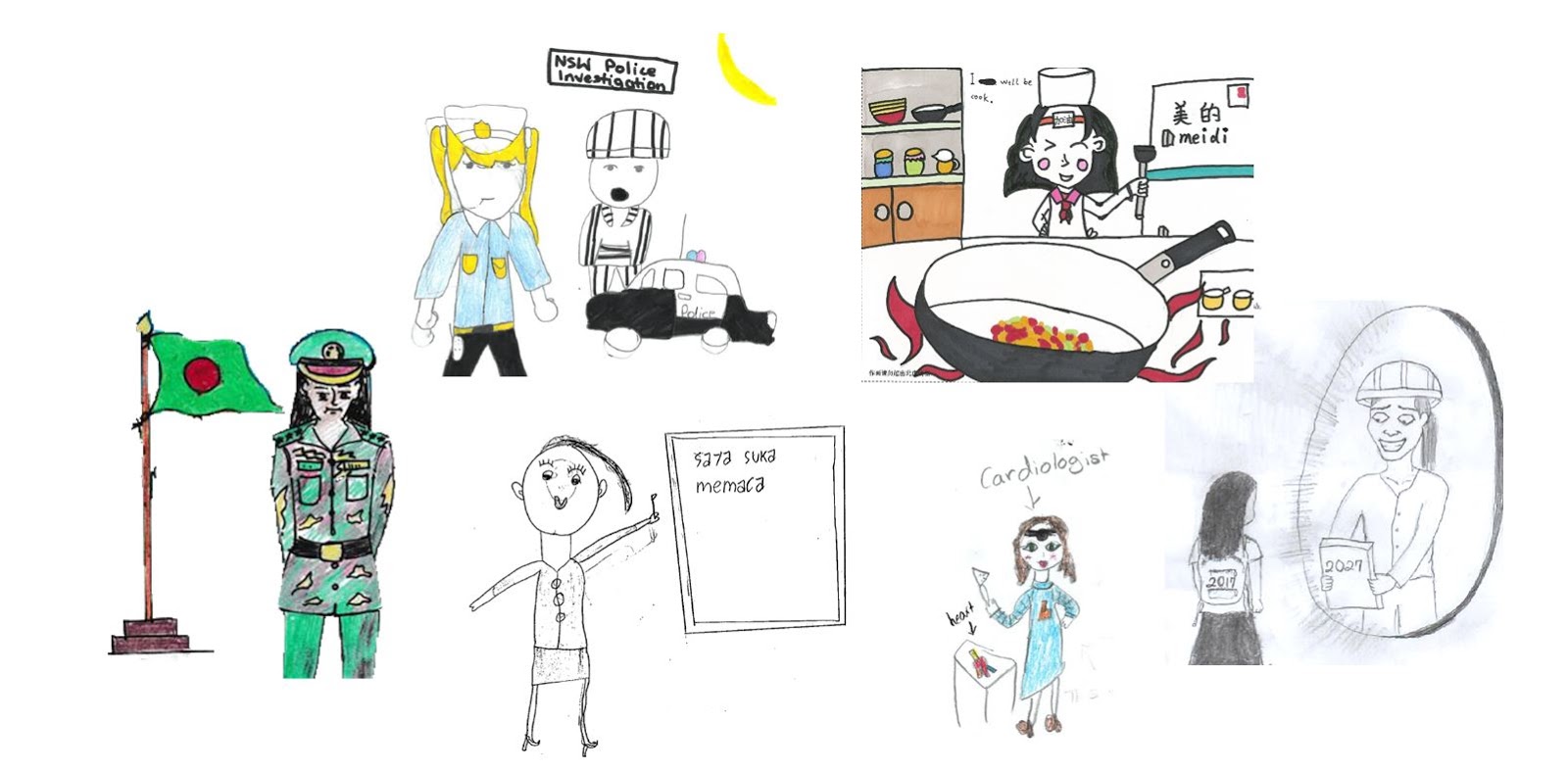
Drawing the future: What children want to be when they grow up

by , in
by Andreas Schleicher
Director, Directorate for Education and Skills


The next generation of children will need to create jobs, not just seek jobs. They will draw on their curiosity, imagination, entrepreneurship and resilience, the joy of failing forward. Their schools will help them discover their passions and aspirations, develop their potential, and find their place in society.

But that is easier said than done, and good reading, math and science skills are just part of the answer. To develop their dreams and invest the effort it takes to realise them, children need, first of all, to be aware of the world and the opportunities it offers them.

We often take that awareness for granted, perhaps because schools tend to be designed and run by people who succeeded in them. But this report paints a different picture. Statistics showed previously that more than one in five teenagers are looking to secure the 2.4% of new and replacement jobs in the UK economy that are predicted to be found in culture, media and sports occupations. More generally, over one-third of 15-16 year-olds career interests lie in just 10 occupations. And 7 out of the ‘bottom 10’ young peoples’ occupation choices are actually well-paid jobs. The Drawing the Future survey shows that primary children’s aspiration is also concentrated around similar occupations.

It all starts early. When children between the age of 7 and 11 were asked to draw their future, the most popular job for UK children was a sportsman/woman, with 21% leading by a margin of over 10 percentage points over the next popular occupation; and the sportsman/woman was 10 times more highly rated than a nurse or health visitor (2%). Will these children invest the necessary effort to study tough subjects such as math and science when they don’t see them related to their own aspirations?

Perhaps the most worrying finding of the Drawing the Future survey is the myopic view that children from disadvantaged backgrounds have about the possibility set of their futures. Their sense of awareness remains often limited to the jobs of their parents, and that holds across all countries taking part in this study, except Uganda and Zambia, where teachers were the biggest influencers.

Giving children a better sense of the world of work is not just a matter of social justice. It is also a matter of bringing the potential of the next generation fully to bear. At a time when our economies count on everyone’s contribution, we cannot afford that disadvantaged youths rule themselves out of careers that they could successfully pursue. Having children know someone who did the job they aspire to turns out to be key, and schools can play such a powerful role in helping children meet more people from more occupations.

The drawings also show clear gender patterns. Boys have a preference for working with things, girls tend to prioritise working with people. Over 4 times the number of boys wanted to become engineers compared to girls, and nearly double the number of boys drew scientists as their future jobs compared to girls in the sample. To be fair, the UK has done a lot to level the playing field. For example, 15-year-old boys and girls in the UK achieved the same science results in the global PISA test. But also in this age group far more boys than girls said they wanted to become science and engineering professionals. So more science lessons may be missing the point. The question is rather how to make science learning more relevant to children and youths, including through broadening their views of the world by given them greater exposure to a wider range of occupations. Career counselling in secondary schooling comes far too late. It is clear from the drawings that children arrive in school with strong assumptions based on their own day to day experiences, which are shaped by ideas surrounding gender, ethnicity and social class. Those who still have doubts should watch the 2 minute Redraw the Balance film featuring 66 pictures of a firefighter, surgeon and a fighter pilot, of which 61 were drawn of men and just 5 with women.

So the future will need more primary schools with teachers who help children see their future and the value of learning beyond knowledge acquisition, who are designers of imaginative problem-based environments, who scaffold problem inquiry and nurture critical evaluation, and who bring in parents and volunteers from the world of work into instruction to show children the richness of life and work. Clearly, schools cannot do this alone, but they can play a key part, and the bottom line is that we owe all youths the education that wise parents want for their own children.

The Drawing the Future report will be formally launched at #Davos on the 25th January #WEF18


Links
Drawing the Future survey
Video: The impact of volunteers on children from disadvantaged backgrounds, interview with Andreas Schleicher, Director of OECD Directorate for Education and Skills
The Programme for International Student Assessment (PISA)
OECD Skills Beyond School

Follow the conversation on twitter: #OECDPISA  and #DrawingtheFuture

My Instagram